
Bone health is often misunderstood because many people think of the skeleton as a fixed structure that never changes. In reality, bones are living tissue that are constantly renewing themselves.
Inside your body, microscopic processes are always working to remove old bone material and replace it with new structure. When this balance is disrupted, bone density can begin to decline.
Bone density loss is strongly associated with ageing, hormonal changes, nutrition, lifestyle factors and metabolic health.
Reduced bone density is linked to conditions such as osteoporosis, a major cause of fragility fractures worldwide.
Understanding how bone loss happens inside the skeleton can help people protect their bone strength before symptoms develop.
Because bone density decline is usually silent, modern diagnostic testing such as DEXA scanning plays an important role in preventative health screening.
Bone is a Living Organ, Not a Static Structure
Many people think of bone as being similar to concrete. This is not correct.
Human bone is a dynamic living tissue that constantly remodels itself through a biological process called bone remodelling.
Two types of specialised cells control bone structure.
Osteoclast cells are responsible for breaking down old or damaged bone tissue. This process releases minerals such as calcium back into the bloodstream.
Osteoblast cells build new bone by creating fresh mineralised bone matrix.
In healthy adults, bone resorption and bone formation occur at similar rates.
Bone density loss begins when bone breakdown becomes faster than bone rebuilding.
When this imbalance continues over time, internal bone structure becomes thinner and weaker.
What Happens Inside Bones When Bone Density Decreases
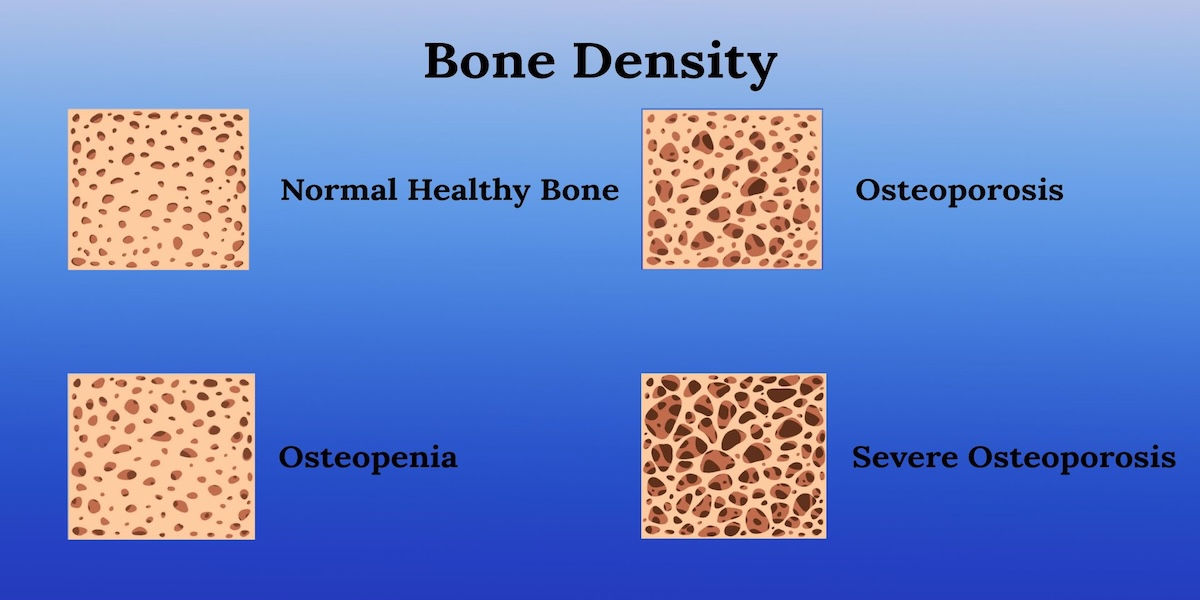
Bone is not completely solid. Inside many bones is a three-dimensional internal framework known as trabecular bone.
Trabecular bone is particularly important in weight-bearing areas such as the spine, hips and wrists.
When bone density starts to decline, several structural changes occur inside this framework.
First, the microscopic struts inside trabecular bone become thinner. These struts act like supporting beams inside a building.
Second, some connections between bone structures are lost completely. When these internal bridges disappear, bone becomes less able to absorb mechanical stress.
Third, the spacing between bone strands increases. This reduces the skeleton’s ability to handle impact forces from movement or falls.
At the same time, cortical bone, which forms the hard outer shell of bone, also begins to thin.
Small microscopic pores can develop in cortical bone. Over time, these pores may enlarge, reducing overall bone strength.
It is important to understand that bone loss is not simply a reduction in quantity. It is a deterioration of internal architecture.
Cellular Mechanisms Behind Bone Density Loss
Bone metabolism is influenced by hormones, nutrition and physical activity.
Oestrogen is one of the most important hormones for bone protection.
When oestrogen levels decline, especially during menopause, osteoclast activity can increase. This accelerates bone breakdown and can lead to faster bone density reduction.
Low protein intake can also contribute to bone weakness because bone matrix contains collagen.
Protein is essential for osteoblast function and bone tissue repair.
Vitamin D deficiency is another major risk factor for bone density loss.
Vitamin D supports calcium absorption from the digestive system. Without adequate vitamin D levels, bone mineralisation can be impaired.
Physical activity plays a critical role in maintaining bone density.
Resistance training and weight-bearing exercise create mechanical stress signals that stimulate bone formation.
Without regular mechanical loading, bone remodelling tends to favour bone loss rather than bone growth.
Ageing naturally reduces osteoblast efficiency. This means older adults rebuild bone more slowly.
Why Bone Density Loss is Often Called a Silent Disease
Bone density decline is sometimes called a silent disease because early stages usually cause no pain.
Bone tissue does not contain pain receptors in the same way as muscles or skin.
This means structural weakening can occur without noticeable symptoms.
Many people only discover reduced bone density after experiencing a fracture caused by minor trauma.
Early screening is therefore essential.
Dual energy X-ray absorptiometry, commonly known as DEXA scanning, is currently one of the most accurate methods for measuring bone mineral density.
DEXA scans measure how much mineral content is present inside bones and help clinicians assess fracture risk before structural damage occurs.
At BodyView, DEXA scanning is combined with body composition analysis to provide a detailed overview of skeletal and metabolic health.
Lifestyle Factors That Accelerate Bone Density Loss
Modern lifestyle patterns can unintentionally increase bone loss risk.
Aggressive calorie restriction is one of the major contributors.
When the body experiences long term energy deficit, bone formation may slow as the body prioritises survival mechanisms.
Low dietary fat intake can also affect hormone production because many hormones are synthesised from cholesterol pathways.
Excessive endurance exercise without adequate recovery and nutrition can sometimes contribute to bone stress.
Sedentary behaviour is another important risk factor.
Bones respond positively to mechanical loading. If movement levels are low, bone-stimulating signals decrease.
Smoking has been consistently associated with lower bone mineral density.
Excessive alcohol consumption can also interfere with bone metabolism and calcium balance.
How DEXA Scans Help Detect Bone Density Changes Early
DEXA scanning is considered a gold standard assessment tool for bone density measurement.
The technology uses two low dose X ray beams to differentiate between bone tissue and soft tissue.
Results are usually reported using two key measurements.
The T score compares bone density with that of a healthy young adult reference population.
The Z score compares bone density with people of the same age and sex.
These measurements help clinicians identify osteopenia and osteoporosis risk.
Early detection allows preventative strategies to be implemented before fractures occur.
Can Bone Density Loss Be Reversed?
In the early stages, bone density loss can often be slowed or partially improved.
Resistance training is one of the most effective natural methods for supporting bone health.
Weight-bearing exercise stimulates osteoblast activity and promotes bone formation.
Adequate protein intake is essential for collagen matrix development.
Optimising vitamin D levels and ensuring sufficient dietary calcium helps provide the minerals needed for bone strength.
In some cases, medical treatment may be recommended to reduce excessive bone resorption.
Bone health should be viewed as a long-term biological investment rather than a short-term condition.
Protecting Bone Health for Long-Term Longevity
Bone health is closely connected to muscle health, hormonal balance and metabolic function.
Modern longevity research emphasises the importance of maintaining skeletal strength throughout adulthood.
Regular health assessment, balanced nutrition and physical activity are the foundations of bone protection.
Preventative screening is especially important because bone density decline develops slowly over many years.
Bone density loss begins deep inside the microscopic architecture of your skeleton.
The internal honeycomb structure that gives bone strength gradually loses connections as bone breakdown exceeds bone formation.
These changes usually occur without pain, which is why many people are unaware that bone density is declining.
Understanding bone biology allows earlier intervention and better long-term health outcomes.
Bone is living tissue. Looking after it today helps protect mobility, independence and quality of life in the future.
At BodyView, our scanning and metabolic testing services are designed to help you understand your body beyond surface-level measurements.
Protecting bone health is an essential part of ageing well.